Omnia Real Estate | Washington DC Transit & Living Guide
Car-Free Living Along the H Street Corridor
Car-free living along Washington D.C.'s H Street Corridor operates on a bus-first, highly walkable routine following the conclusion of DC Streetcar service on March 31, 2026. Supported by 24-hour WMATA D20 bus lines, D2X express routes, Capital Bikeshare stations, and direct walking access to Whole Foods, Giant, and Union Market, H Street delivers a practical car-light or car-free lifestyle anchored by Union Station and NoMa-Gallaudet U Metrorail stops.
Transit & Amenities Matrix
H Street Corridor Car-Free Mobility Overview
Transit Option / Anchor | Service Frequency & Hours | Destination Connectivity | Car-Free Lifestyle Benefit |
|---|---|---|---|
WMATA D20 Bus Line | 24/7 service (10-20 min headways) | Minnesota Ave to Farragut Square via H St | All-day, all-night transit backbone across Downtown D.C. |
WMATA D2X Express Bus | Weekdays 6:00 a.m. to 9:00 p.m. (15 min) | Limited-stop express along H Street NE | Rapid weekday commuter connection to Downtown employment hubs |
Union Station Anchor | Red Line Metrorail, MARC, VRE, Amtrak | Western edge of H Street NE corridor | Regional rail, Metrorail access, and bikeshare connection hubs |
NoMa-Gallaudet U Metrorail | Red Line Metrorail & MB Trail | Union Market, Florida Ave, Trader Joe's | Northern walking anchor with bike lockers and trail connections |
Data Sources: Washington Metropolitan Area Transit Authority (WMATA) route guides and District Department of Transportation (DDOT) bus priority project logs.
Buses and Bikes as the Transit Backbone
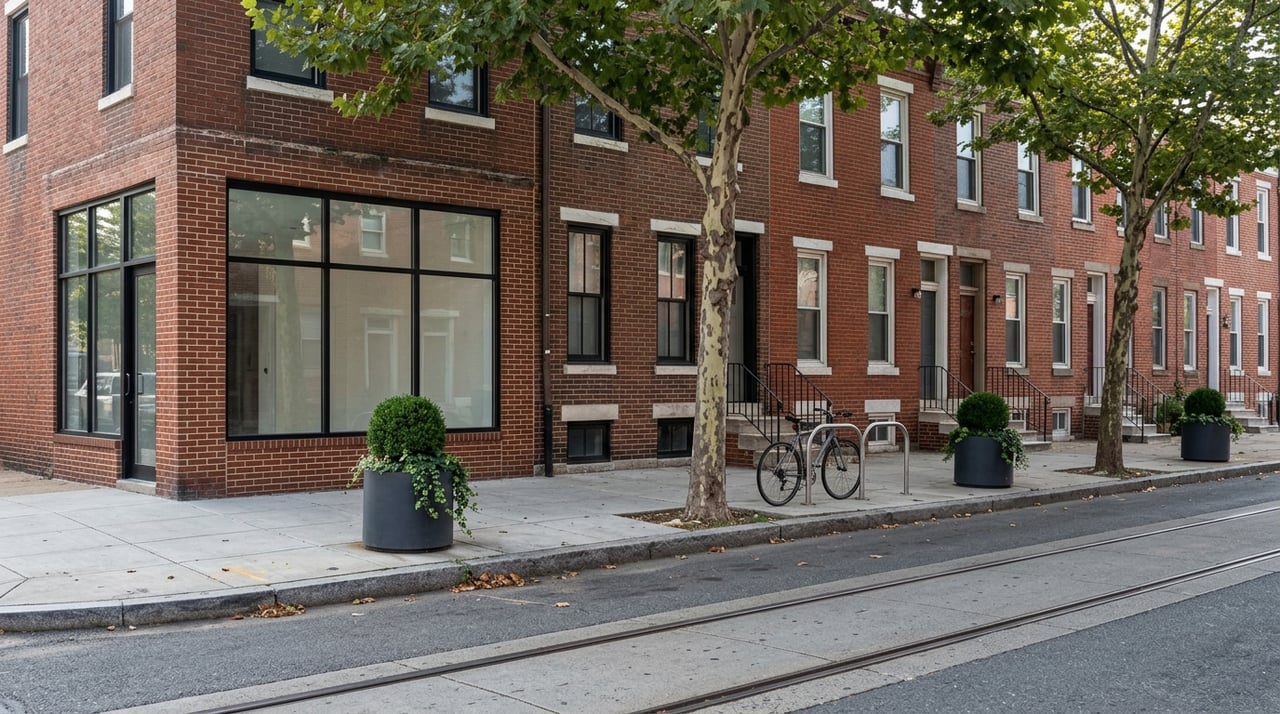
Thinking about living in D.C. without a car? The H Street Corridor still makes that possible, but the daily rhythm has changed. With the conclusion of DC Streetcar service on March 31, 2026, the corridor now operates as a bus-first, highly walkable neighborhood anchored by strong rail connections at its eastern and western boundaries.
- 24-Hour Bus Service: WMATA's D20 runs 24/7 along H Street NE, connecting Minnesota Avenue directly to Gallery Place and Farragut Square.
- On-Corridor Grocery Access: Whole Foods Market (600 H St NE) and Giant Food (300 H St NE) allow residents to handle daily errands entirely on foot.
- Capital Bikeshare Integration: Capital Bikeshare offers over 8,000 bikes and 800 regional stations, providing first-and-last-mile connectivity to Metrorail stops.
Daily errands are a primary strength along H Street. In addition to Whole Foods and Giant, CVS operates at 645 H Street NE near Union Station. Nearby Union Market features over 50 independent vendors, complemented by Trader Joe's at 350 Florida Ave NE near NoMa-Gallaudet Metrorail.
Buyer Strategy & Positioning
Evaluating Your Car-Free Routine Before Buying
01
Commute Frequency
Evaluate your weekly work schedule. D2X limited-stop buses run peak weekday hours, while D20 handles off-peak and weekend transit.
02
Anchor Proximity
Decide whether living near Union Station (west) or NoMa-Gallaudet U and Union Market (north/east) better fits your daily routine.
03
Micro-Mobility Use
Leverage nearby Capital Bikeshare docks and cycle tracks along Metropolitan Branch Trail to bridge trips across town.
04
Car-Light Flexibility
Consider whether a car-light setup (handling routine errands on foot while using occasional rideshares) suits your lifestyle best.
Expert Real Estate Advisory on H Street
Navigating H Street NE requires block-by-block analysis. Whether you are evaluating historic rowhomes, modern condo developments, or nearby properties in Logan Circle and the H Street Corridor hub, Omnia Real Estate provides data-driven guidance on transit access and long-term resale value.
Schedule a private consultation with Omnia Real Estate to evaluate D.C. urban properties and align your purchase with your daily lifestyle.
Omnia Real Estate Advisory
Washington D.C., Maryland & Virginia Leaders
Representing buyers, sellers, and investors across Washington D.C., H Street NE, Logan Circle, and Capitol Hill. Renowned for transit-oriented real estate insights and urban livability guidance.
Verified Authority: Senior Real Estate Advisory Serving the Mid-Atlantic Region
Frequently Asked Questions
H Street Car-Free Living FAQs
Is the H Street Corridor still good for car-free living in 2026?
Yes. The corridor remains a credible car-light or car-free option, relying on buses, walking, and bikes following the end of DC Streetcar service on March 31, 2026.
What is the main transit option on the H Street Corridor now?
WMATA's D20 is the main 24-hour route, connecting H Street NE to Gallery Place and Farragut Square.
Is there a faster express bus on H Street during the week?
Yes. WMATA's D2X offers weekday limited-stop express service from 6:00 a.m. to 9:00 p.m. with 15-minute average frequency.
What grocery stores are located directly on the H Street Corridor?
Whole Foods Market (600 H St NE) and Giant Food (300 H St NE) sit directly on the corridor, supported by CVS (645 H St NE) and nearby Trader Joe's at NoMa.
Real Estate Advisory
Ready to Explore H Street Real Estate?
Partner with Omnia Real Estate for transit-oriented property analysis, neighborhood selection, and expert representation across Washington D.C.