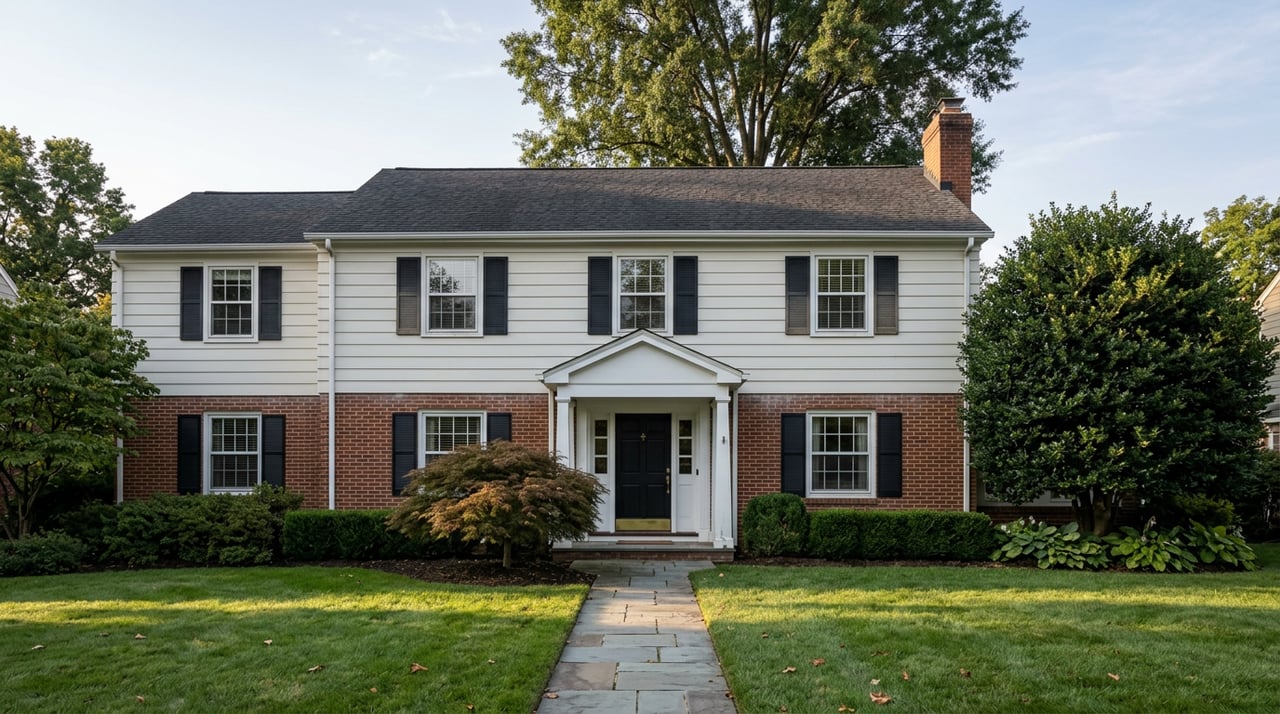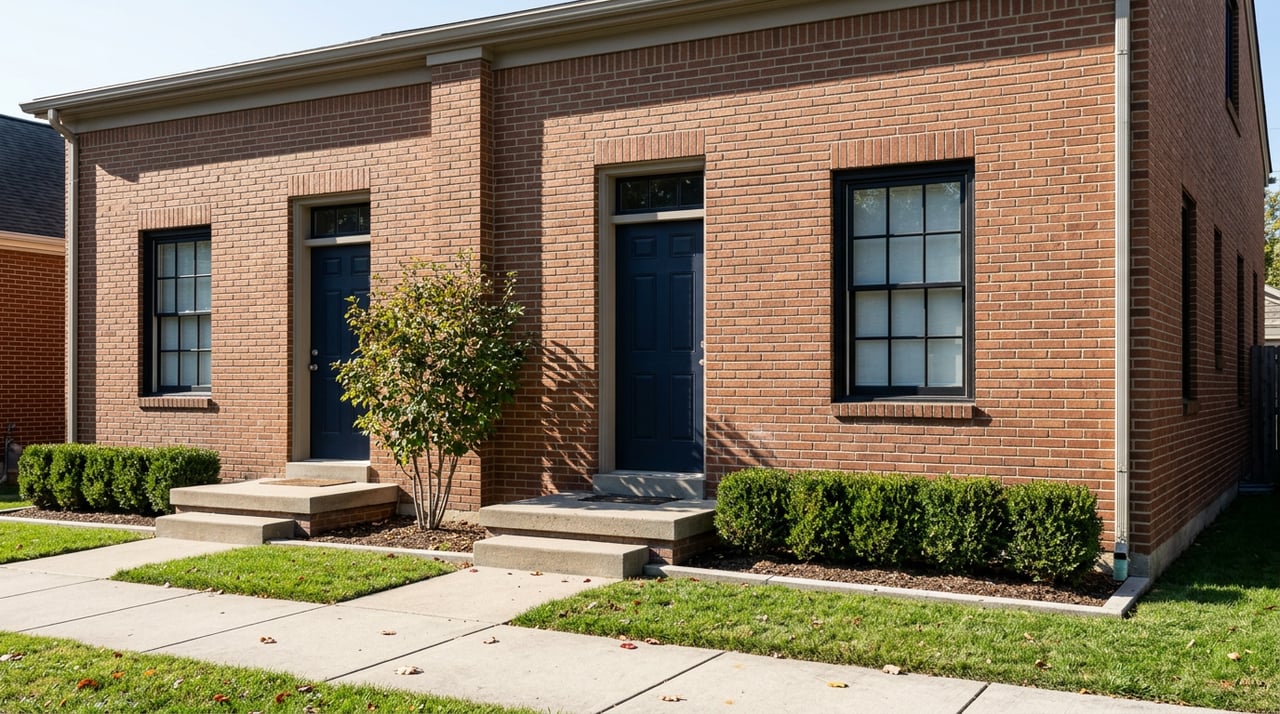
In March 2026, a five-bedroom duplex in Arlington's North Highlands neighborhood sold for $1,610,000. Its next-door neighbor, a four-bedroom single-family home, had sold three months earlier for $1,615,000. Two different housing types, built under two different sets of rules, on the same block, five thousand dollars apart.
If you have been comparing Arlington to other DMV neighborhoods by pulling up the median price on a portal, that sale should bother you a little. The whole argument for Arlington's newest housing type, the duplexes, triplexes and small multi-unit buildings built under the county's Expanded Housing Options ordinance, is that they cost less than a comparable detached home. County data backs that up in aggregate. But walk one specific block in North Highlands and the discount disappears. Understanding why tells you more about what you are actually buying in Arlington right now than any median price will.
What EHO Actually Changed
Arlington's County Board voted unanimously in March 2023 to allow up to six housing units, by right, on lots that had previously been zoned for a single detached home only. The policy is formally called Expanded Housing Options, though most people, including the county's own reporting, refer to it as Missing Middle. The goal was to put smaller, cheaper units into neighborhoods that had only ever produced one product: a full detached house on a full lot.
That is a meaningful change to what a buyer touring Arlington in 2026 will actually encounter. On the same residential street, you might see a traditional single-family home, a newly built duplex, or a six-unit building, all on lots that look identical from the sidewalk.
The Legal Status Is Still Open
Here is the part that a median price will never tell you: the legal footing under these newer units has been unstable for three years, and it is still not settled.
A group of homeowners sued the county over the ordinance almost immediately. In September 2024, retired Fairfax County Circuit Court judge David Schell ruled in the case, known as Nordgren v. Arlington County Board, that the county had failed to properly initiate the zoning amendment, had unlawfully delegated legislative authority to staff, and had not adequately studied stormwater and tree canopy impacts. His ruling voided the ordinance entirely, and with it, every EHO permit the county had issued. Arlington's planning department sent letters to developers stating flatly that permits already granted no longer existed.
The county appealed. In June 2025, the Virginia Court of Appeals reversed that ruling, but on a procedural technicality rather than the substance of the case: the plaintiffs had not named the developers who held EHO permits as parties to the lawsuit, and those developers had a right to be included. The ordinance went back on the books, and the county resumed processing EHO applications in the months that followed.
The homeowners then took the procedural question to the Virginia Supreme Court. The court heard arguments in April 2026 on whether to accept the case, and on May 19, 2026, it agreed to review the Court of Appeals ruling. Arlington County's own public update on that date was careful to note what this does and does not mean: the Supreme Court is not yet weighing in on whether EHO is legally valid, only on whether the Court of Appeals was right that developers should have been part of the case. The county's position, stated on its own permitting page, is that it will keep processing EHO applications under the 2023 ordinance until told otherwise.
As of this writing in September 2026, that is still where things stand. A spokesperson for Neighbors for Neighborhoods, the group funding the litigation, has said he expects the case to reach trial within three to six months of the May ruling, which points to a possible resolution sometime this fall or winter. If the Supreme Court eventually sides with the county, the case returns to circuit court for a full hearing on the merits, this time with developers at the table. If it sides with the homeowners on this narrow question, the September 2024 ruling voiding the ordinance could be reinstated, though completed structures would not be undone retroactively.
None of this means EHO construction is illegal today. It means that anyone buying a duplex, triplex or six-unit property built under this ordinance is buying into a permit history that has already flipped from valid to void and back to valid once, with another decision point on the calendar. As of spring 2026, 59 EHO projects were listed on the county's permitting dashboard, including nine approved in the months after the 2025 appellate ruling, though some applicants have since pivoted their plans to single-family construction rather than wait out the litigation.
Three Markets, One Median
The aggregate price data on Arlington doesn't hint at any of this, and it barely agrees with itself. One widely used home-value index put the average Arlington home value down slightly year over year as of late May 2026. A separate portal tracking the three months ending July 2026 showed a median sale price of $835,000, up 7.7 percent over the same period the year before. A market recap covering April 2026 described a new average price record above $1 million, driven almost entirely by single-family sales, while condo prices in the same month sat closer to half a million.
The Northern Virginia Association of Realtors' own 2026 forecast, released in December 2025, makes the split explicit rather than accidental. Arlington single-family homes were projected to see 3.8 percent price growth in 2026, the highest of any segment and second only to Alexandria's projected 4.2 percent among the region's jurisdictions. Townhouses were projected at 1.9 percent. Condos were projected at just 2.1 percent, with inventory expected to grow faster than any other segment, nearly 31 percent, partly because rising condo association fees have been dragging on demand.
A single median sale price flattens all of that into one number. It cannot tell you whether the home you are looking at belongs to the segment gaining ground or the one losing it.
Where the Discount Actually Shows Up, and Where It Doesn't
The county's own 2025 Annual Data Report on EHO, analyzed by YIMBYs of Northern Virginia, gives the clearest picture of what these newer units are actually delivering. The average newly built detached single-family home in Arlington runs 5,348 square feet. The average EHO unit runs 1,649 square feet, with townhome-style units averaging 2,378 square feet and units inside six-unit buildings averaging just 1,259 square feet. Most EHO homes have three bedrooms. Almost none of the new detached homes have fewer than four.
On sale price, the report found one EHO unit in zip code 22201 that closed 45 percent below the average price of a newly built single-family home in that zip. That is the number county advocates point to when they argue EHO is delivering on its affordability goal.
It is also a single data point, and the North Highlands sale shows why it does not generalize cleanly. A five-bedroom duplex unit and a four-bedroom detached home, on the same street, closed within five thousand dollars of each other. Lot size, finish level, exact square footage and buyer competition on that particular block all mattered more than the zoning category the structure was built under. The 45 percent gap is real in the aggregate. It is not a guarantee on any individual listing.
What This Means If You're Touring One This Fall
If you are comparing a newly built EHO duplex or multi-unit property against a traditional single-family listing in Arlington, the zoning history of that specific address matters as much as its square footage. Two questions are worth asking before you get attached to a property:
- When was the permit issued, and did it survive the September 2024 ruling that voided the ordinance, or was it issued after the ordinance was reinstated in mid-2025?
- Has the seller or builder recorded any language in the land records addressing what happens to the unit if the ordinance is ultimately struck down on the merits?
That second question sounds unusual, but Arlington County required exactly this kind of language for permits issued during earlier stretches of the litigation, warning future owners that the housing type could become legally invalid depending on how the appeals played out. Whether that language is still being required, and whether it appears on a given property, is not something a listing sheet will tell you. It takes reading the actual permit history and, in some cases, the deed itself.
This is the kind of detail that gets lost when a buyer is working from a portal search and a median price. It is also exactly the kind of contract-level question a legal background is built for, which is the reason this piece is being written by a firm led by a Principal Broker with counsel experience rather than left to an aggregate market report.
A Few Questions Worth Asking Before You Tour
Is it currently legal to build an EHO duplex or multi-unit property in Arlington? Yes, as of September 2026. The ordinance is in effect and the county continues to process new applications while the Virginia Supreme Court reviews a narrower procedural question in the case.
If the Supreme Court eventually rules against the county, would existing duplexes have to be torn down? Based on how the litigation has unfolded so far, completed structures have not been undone retroactively. The more immediate effect of an adverse ruling would fall on projects still in the permitting or construction pipeline, not finished, sold homes.
Does an EHO unit automatically cost less than a comparable single-family home? Often, but not always. County-level data shows a meaningful average discount tied to smaller unit size. Individual sales, like the North Highlands pair, show that lot-specific factors can erase that gap entirely.
Arlington's price data will keep giving you one number. The market underneath it is behaving like three. If you are trying to figure out which of those three you are actually looking at on a given block, and what its permit history says about the risk you are taking on, that is a conversation worth having before you write an offer, not after.
Omnia Real Estate works across Arlington and the rest of the DMV with a broker-led approach built around exactly this kind of contract and zoning detail. Schedule a personalized consultation to talk through a specific property before you tour it.