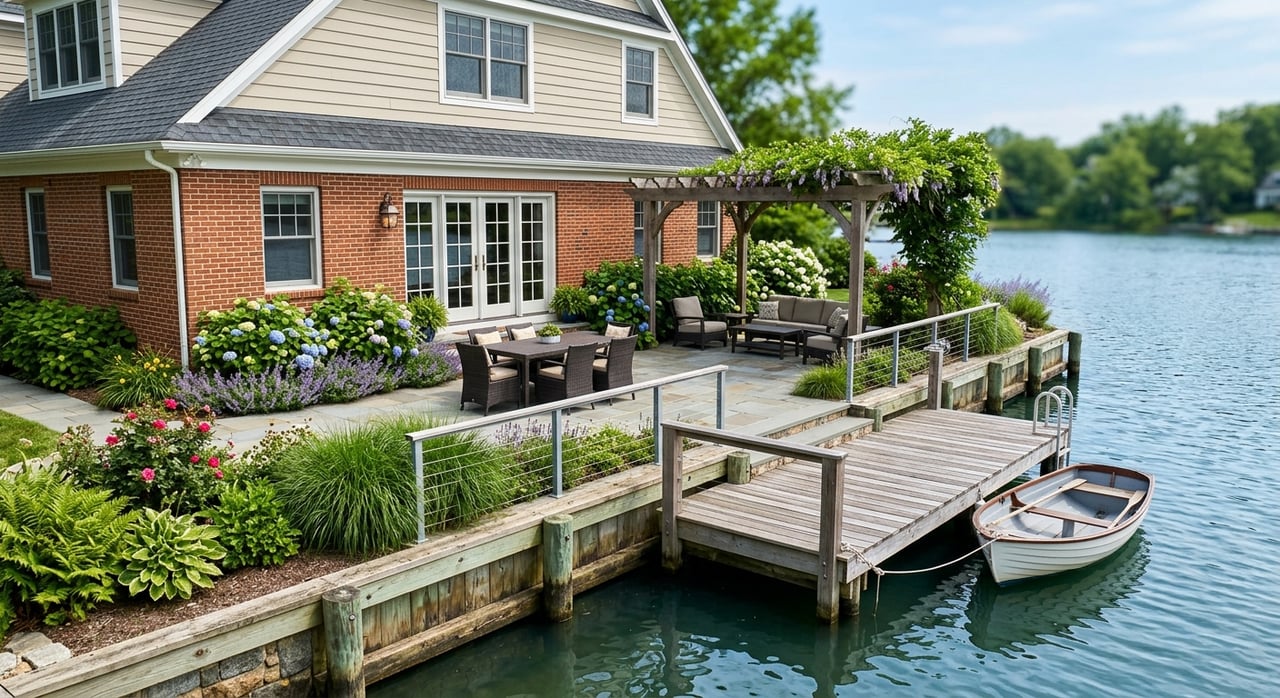
Annapolis Coastal Real Estate Guide (Anne Arundel County ZIP 21401, 21403)
Buying Waterfront Property in Annapolis: Key Considerations
Buying waterfront real estate in Annapolis, Anne Arundel County (ZIP 21401, 21403) requires navigating a 1,000-foot Critical Area buffer, FEMA AE or VE flood zone designations, and Maryland Department of the Environment (MDE) riparian pier permitting. Average waterfront home values range from $1,250,000 to $4,850,000, with mandatory 30-day flood insurance waiting periods.
Waterfront Property Assessment Tool
Evaluating an Annapolis Coastal Parcel?
Review local shoreline regulatory standards, flood insurance risk categories, and seasonal listing timelines.
Annapolis Waterfront Regulatory & Risk Audit
Regulatory rules compiled from MDE, FEMA, City of Annapolis, and Anne Arundel County land codes [1][cite: 1].
Regulatory Domain | Governing Authority | Standard Threshold / Distance | Primary Buyer Impact |
|---|---|---|---|
Chesapeake Bay Critical Area | Critical Area Commission & Anne Arundel County | 1,000 ft landward / 100 ft buffer | Restricts lot coverage, tree clearing, and home additions within the primary shoreline buffer. |
Pier & Slip Construction Permits | Maryland Department of the Environment (MDE) [2] | Joint Federal/State Application | Requires state wetland license for docks, pilings, boat lifts, or dredging in tidal waters. |
Floodplain & Elevation Mandates | FEMA & City of Annapolis Floodplain Admin [3] | FEMA FIRM Zones A, AE, VE | Triggers mandatory lender flood insurance and structural elevation building codes. |
Living Shoreline Requirement | MDE Tidal Wetlands Division [4] | Non-structural preference | Requires natural marsh vegetation over hard bulkheads unless an explicit engineering waiver is granted. |
Official Sources: City of Annapolis Floodplain Information | MDE Wetlands & Waterways Program [1][cite: 1].
Critical Mapping Parameters
Start With the Property Map & Elevation Certificates
When evaluating waterfront property in Annapolis, parcel boundaries on paper dictate buildability and long-term operating costs[cite: 1]. Floodplain status, Critical Area classifications, and riparian rights shape what can be altered on site[cite: 1]. Reviewing official FIRM panel maps and securing an active Elevation Certificate prior to submitting a purchase offer protects your investment from unforeseen building restrictions or premium surges[cite: 1].
Technical Verification
Primary Technical Checks for Annapolis Buyers
Riparian Rights & Pier Permits
Maryland law treats shoreline access as a riparian right, but submerged land beneath mean high water is state property[cite: 1]. Building or extending a private dock on Spa Creek, Back Creek, or the Severn River requires a Joint Federal/State permit[cite: 1]. Verify existing permit documentation for pilings, boat lifts, and dredging depth[cite: 1].
- Authority: MDE Tidal Wetlands Division [2][cite: 1]
- Checklist: Pier length, slip count, water depth at low tide
Shoreline Stabilization & Living Buffers
Maryland mandates living shorelines featuring native marsh vegetation and sill stone over traditional timber bulkheads[cite: 1]. Replacing or repairing existing bulkheads in Anne Arundel County requires civil permitting[cite: 1]. Inspect bulkheads for tieback corrosion, soil washout, and piling rot before waiving inspection contingencies[cite: 1].
- Policy: Natural living shoreline preference[cite: 1]
- Audit Target: Structural bulkhead integrity & erosion signs[cite: 1]
FEMA Flood Insurance & Exclusions
Standard homeowners insurance excludes flood, rising water, and storm surge damage[cite: 1]. Federally backed mortgages require NFIP or approved private flood policies for properties in Special Flood Hazard Areas[cite: 1]. Crucially, NFIP coverage excludes piers, bulkheads, and docks, requiring separate risk allocation[cite: 1].
- Guidance: Maryland Insurance Administration Flood Basics [5][cite: 1]
- Note: Mandatory 30-day NFIP policy waiting period[cite: 1]
Due Diligence Framework
HOA, Community Docks & Title Verification
Community Pier Restrictions
In residential riparian subdivisions, Anne Arundel County code specifies that establishing a community pier with slip allocations can legally prohibit private individual piers[cite: 1]. Always review community dock covenants [6][cite: 1].
Land Record Title Audits
Maryland land records are public[cite: 1]. Reviewing recorded deeds, surveys, and access easements confirms whether water rights, dock maintenance agreements, or conservation easements are properly attached to the title [7][cite: 1].
CFPB Buyer Protections
The Consumer Financial Protection Bureau recommends asking disaster risk questions prior to submitting written offers and maintaining contingency clauses allowing contract renegotiation if water conditions fail inspection [8][cite: 1].
Explore Regional Markets
Related Annapolis & Coastal Real Estate Guides
Annapolis Listing Windows
Seasonal buyer trends and boating season market timelines for local homes.
Eastport vs. Downtown
Comparing maritime neighborhood culture, maritime access, and community vibe.
Old Town Alexandria
Historic Potomac River waterfront rowhouses and marina access in Northern Virginia.
Waterfront Valuation
Request a specialized dock and shoreline comparative market analysis.
Leslie Shafer | Real Estate Specialist
Omnia Real Estate | Licensed Agent in Maryland & Washington DC
Leslie Shafer brings over 12 years of specialized coastal real estate representation across Anne Arundel County. Her counsel-informed practice guides buyers through MDE pier permitting, FEMA elevation compliance, and complex waterfront contract negotiations.
Frequently Asked Questions
Annapolis Waterfront Property FAQs
What should you check first when buying waterfront property in Annapolis?
Start by confirming the parcel on city and county maps, then verify flood zone status, Critical Area 100-foot buffer boundaries, riparian rights, and whether an active elevation certificate or Letter of Map Amendment (LOMA) is on file[cite: 1].
Do Annapolis waterfront homes always require flood insurance?
Not in all cases, but federally backed lenders mandate flood insurance for structures in Special Flood Hazard Areas (Zones A, AE, VE)[cite: 1]. Standard homeowners policies exclude flood damage entirely[cite: 1].
What do riparian rights mean for an Annapolis waterfront buyer?
Riparian rights grant a shoreline owner the right to apply for state permits to build water structures, such as private piers or boat slips[cite: 1]. However, submerged lands remain state property, and state permitting laws govern all construction[cite: 1].
Are bulkheads and docks covered by standard NFIP flood insurance in Maryland?
No[cite: 1]. The Maryland Insurance Administration explicitly confirms that National Flood Insurance Program policies do not cover piers, docks, wharves, or bulkheads, requiring separate capital reserves for marine maintenance[cite: 1].
What documents are most critical before closing on an Annapolis waterfront home?
Prioritize reviewing the recorded deed, boundary survey, elevation certificate, MDE pier and bulkhead permit history, HOA community dock covenants, title commitment, and flood determination documentation[cite: 1].
Specialized Coastal Representation
Schedule an Annapolis Waterfront Consultation
Partner with Leslie Shafer and Omnia Real Estate to audit dock permits, review Critical Area regulations, and negotiate your waterfront property purchase with total clarity.